
Together, we can ensure that marginalized individuals in contact with the criminal law are not forgotten but empowered with hope and opportunity. Be part of this movement for fairness, compassion, and meaningful change.
Together, we can ensure that marginalized individuals in contact with the criminal law are not forgotten but empowered with hope and opportunity. Be part of this movement for fairness, compassion, and meaningful change.
Decage is a Dhaka-based non-governmental organization that works to address the structural neglect and legal invisibility faced by citizens in conflict with law, particularly those from the socioeconomically marginalized section. With a commitment to advocate against systemic malpractices of criminal justice institutions and address the infringements of human rights by the law enforcement agencies, Decage strives to advocate for a more humane, equitable and just criminal legal system in Bangladesh.
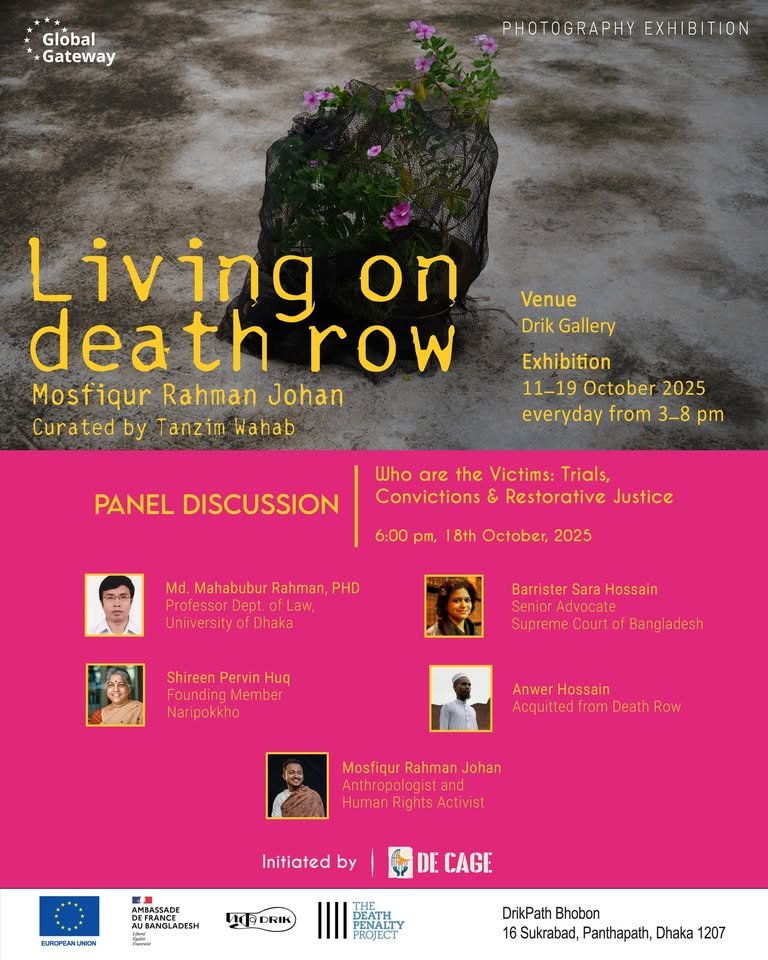
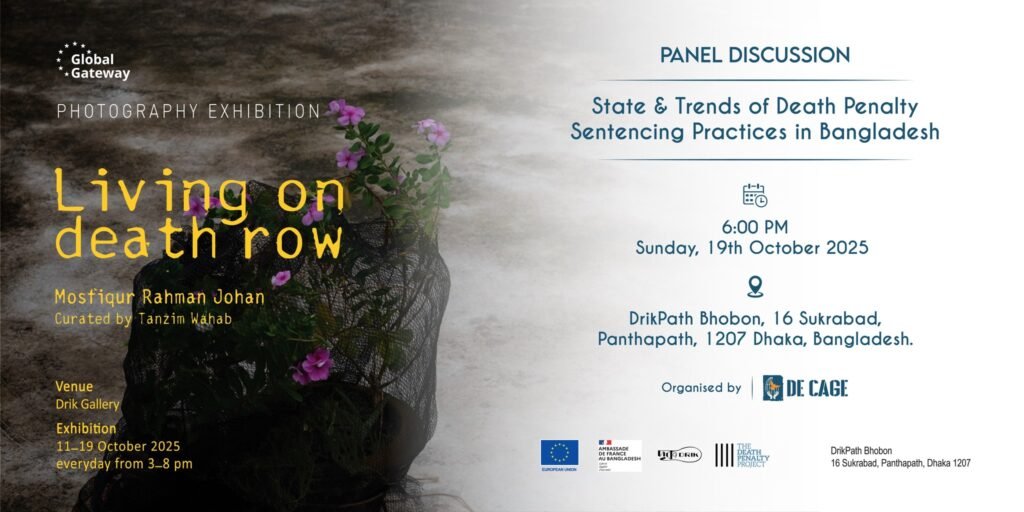
The death penalty continues to be one of the most debated and polarizing features of Bangladesh’s criminal justice system. Despite global trends toward abolition, Bangladesh retains capital punishment for a wide range of offences—currently numbering more than thirty under various laws, including the Penal Code, the Anti-Terrorism Act, the Special Powers Act, and the Women and Children Repression Prevention Act. Although death sentences are frequently handed down by trial courts, the actual rate of execution remains comparatively low. This discrepancy highlights deeper structural problems: high rates of wrongful convictions, inadequate legal representation for indigent defendants, lengthy delays in the appellate process, and the absence of a clear mechanism for rehabilitation or compensation for those acquitted after years on death row. These concerns have intensified public and scholarly scrutiny, particularly as studies and human rights reports suggest that the death penalty neither deters crime nor ensures justice for victims. Instead, it often exposes the vulnerabilities of marginalized groups who lack access to competent legal aid. Moreover, the prolonged solitary confinement and harsh living conditions of death-row inmates raise serious questions regarding compliance with human rights standards and humane treatment. Another fact is that the concept of victims in the criminal justice system extends beyond those directly harmed by a crime to include individuals affected by wrongful convictions, delayed trials, and inadequate legal representation. Such systemic failures create secondary victims who often remain overlooked. Restorative justice offers a framework to address these gaps by emphasizing accountability, reconciliation, and repair for all parties involved, rather than focusing solely on punishment. Ensuring fair trials, providing effective legal aid, and promoting rehabilitation are essential steps to protect human dignity, prevent further harm, and create a more equitable and humane justice system. Against this complex backdrop, a panel discussion titled ‘Who are the Victims: Trials, Convictions and Restorative Justice’ was held on October 18, 2025 at 6 p.m. at Drik Gallery, located in Drik Bhavan, Panthapath, Dhaka, alongside a photo exhibition titled “Living on Death Row.” The event was organized by the Dhaka-based research organization Decage. The objective of the panel discussion was to critically examine the legal, ethical, and human rights dimensions of capital punishment in Bangladesh. Featuring leading academics, human rights activists, and senior legal practitioners, the event explored key issues surrounding wrongful convictions, systemic delays, the culture of demanding the “highest punishment,” and the urgent need to reform death-penalty laws. The discussion provided a timely and important platform for understanding the broader implications of capital punishment and the reforms necessary to ensure fairness, accountability, and humanity within the justice system. The discussants at the event included Professor Dr. Mahbubur Rahman from the Department of Law at the University of Dhaka, Shireen Huq, a renowned human rights activist and founder of the women’s rights organization Naripokkho, and Barrister Sara Hossain, senior advocate of the Supreme Court and Executive Director of the human rights organization BLAST. The session was moderated by Mosfiqur Rahman Zohan, a human rights activist and photographer. In his speech, Professor Dr. Mahbubur Rahman said that although a large number of death sentences are delivered by the lower courts, a significant portion of them are actually cases of miscarriage of justice. The reason, he explained, is that poor defendants sentenced to death often fail to get good lawyers, and their legal representation is inadequate. Moreover, even when such cases reach the High Court, it can take as long as 20 to 22 years to be resolved. “As a result,” he said, “if a death-row inmate is acquitted after 20 or 22 years, that can in no way be called justice. Rather, it should be termed a systematic miscarriage of justice.” He further stated that the state refuses to compensate the victims of wrongful death sentences on the pretext of financial incapacity. “However,” he added, “the state should at least acknowledge its responsibility.” Dr. Mahbubur Rahman further stated that the crime rate in Bangladesh has remained almost the same as it was thirty years ago. However, over the past two decades, the rate of death sentences has increased alarmingly. To reduce the miscarriage of justice, he said, it is now essential to decrease the number of death sentences being handed down. For that to happen, the number of offences punishable by death must be reduced. He added that certain amendments should also be made to the Penal Code to ensure humane treatment of death-row inmates within prisons. Expressing his concern, he said that under the current system, “we tend to make death-row inmates forget that they are human beings.” He described the prolonged solitary confinement of prisoners sentenced to death as inhuman torture and emphasized the need to reform this practice. He urged that the death penalty should not be treated as a taboo but rather as one form of punishment among others. In the concluding part of his speech, Dr. Rahman remarked that if Bangladesh’s criminal justice system functioned properly, the tendency to demand the death penalty for every crime would have been much lower. He described this tendency as a reflection of public frustration and added that such frustration would diminish if the justice system became effective and remained consistent regardless of changes in government. In response to a question about compensation for those wrongfully sentenced to death, he said that the issue is highly complex under the current law. He proposed enacting a separate legislation to ensure compensation for victims of miscarriage of justice. Speaker Shireen Huq, in her remarks, stated that Bangladesh currently prescribes the death penalty for 33 different offences. In simple terms, she said, “The death penalty is judicial killing.” She noted that there is no evidence to suggest that the death penalty helps reduce crime. Huq further pointed out certain contradictions within Bangladesh’s human rights movement. She explained that although many activists verbally oppose the death penalty, they indirectly support it by demanding “the highest punishment” in some cases. Criticizing the 2013 Shahbagh movement’s slogan “Hang the war criminals,” she said that the culture of
Together, we can ensure that marginalized individuals in contact with the criminal law are not forgotten but empowered with hope and opportunity. Be part of this movement for fairness, compassion, and meaningful change.
Stand with us to strengthen the rule of law and ensure everyone can rely on our legal system.